The Wheel of Life and Death in Taoism, Buddhism, and Hinduism
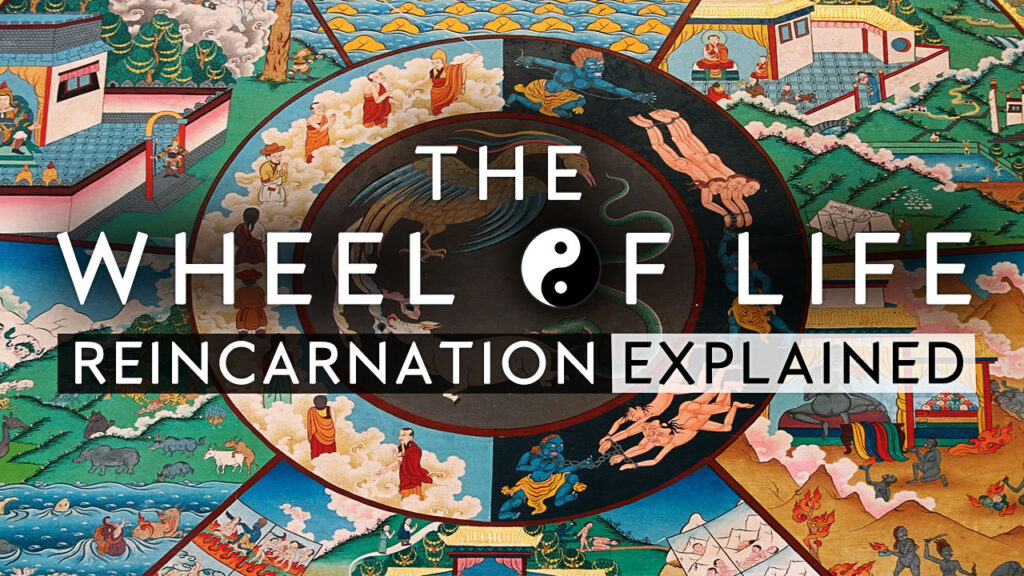
In this podcast, we will explore the wheel of life and the cycles of Samsara in our own lives that bind us to the wheel. In Taoism, Buddhism, and Hinduism there is a belief in the many lifetime’s theory. This view of cyclical time and existence is based on nature and includes our sense of self, which experiences life after life until there is an abiding in that which is beyond the wheel. But how can we abide in our pure nature beyond the wheel when the Samsaric waves of life continue to pull us back into the illusion of separation? That is where a deep understanding of the wheel of Samsara framework is needed. We will explain this framework and the tools necessary for breaking this cycle of Samsara. NOTE: This site directs people to Amazon and is an Amazon Associate member. As an Amazon Associate I earn from qualifying purchases, at no additional cost to you. The pages on this website may contain affiliate links, which means I may receive a commission if you click a link and purchase something that I have recommended. This goes a tiny way towards defraying the costs of maintaining this site.
TAOISM | The Cannibal Thief Who Ate Confucius’s Liver

In this episode of Enlightenment Today, I will explain the Taoist cannibal thief Robber Zhi found in the Zhuangzi text. Robber Zhi is one of the least known and understood in the Zhuangzi text. He is the embodiment of the Taoist attitude towards life, but people confuse this passage with historical events rather than seeing it as a parody. In the story, the moralist Confucius seeks to change Robber Zhi’s rebellious behavior. Confucius believes that someone as charismatic and handsome as Robber Zhi should take on an aristocratic title. When Confucius arrives, Robber Zhi is having a snack of human livers, symbolizing his complete contempt towards Confucian morality. What unfolds in this exchange is one of the greatest intellectual beatdowns within any Taoist text. Though Robber Zhi may appear gross and absurd in this passage, he is an example of the Taoist attitude towards life and how one should follow one’s nature. How can a cannibal thief be a Taoist? It depends on if you understand the depth of the parody. Find out more. NOTE: This site directs people to Amazon and is an Amazon Associate member. As an Amazon Associate I earn from qualifying purchases, at no additional cost to you. The pages on this website may contain affiliate links, which means I may receive a commission if you click a link and purchase something that I have recommended. This goes a tiny way towards defraying the costs of maintaining this site.
TAOISM | Zhuangzi’s Teachings of Psychic Detox
In this podcast, we will explore the ancient fasting the mind teachings. Drawing on the spiritual philosophies and meditative practices of classical yoga, Vedanta, Buddhism, and Taoism, we will explain how fasting the mind directly impacts your habits and way of being in the world to create peace and calmness in your life as well as allow you to build a firm psychological defense against the increasing bombardment of distractions in our world. NOTE: This site directs people to Amazon and is an Amazon Associate member. As an Amazon Associate I earn from qualifying purchases, at no additional cost to you. The pages on this website may contain affiliate links, which means I may receive a commission if you click a link and purchase something that I have recommended. This goes a tiny way towards defraying the costs of maintaining this site.
Taoism’s Secret Teachings of Reincarnation
Reincarnation within Taoism is not as clear-cut as within Hinduism and Buddhism. If one has not explored the Taoist tradition at length then ideas of reincarnation seem vague, especially if one is only familiar with the Tao Te Ching and the Chuang-tzu text. In this episode of The Sacred Word, I will explore the later teachings of Lao-tzu in a text you’ve probably never heard of. This secret text holds the key to understanding reincarnation and if there are any similarities to Hinduism and Buddhism. NOTE: This site directs people to Amazon and is an Amazon Associate member. As an Amazon Associate I earn from qualifying purchases, at no additional cost to you. The pages on this website may contain affiliate links, which means I may receive a commission if you click a link and purchase something that I have recommended. This goes a tiny way towards defraying the costs of maintaining this site.
WHAT AM I?: Answering the Fundamental Question of Your Existence
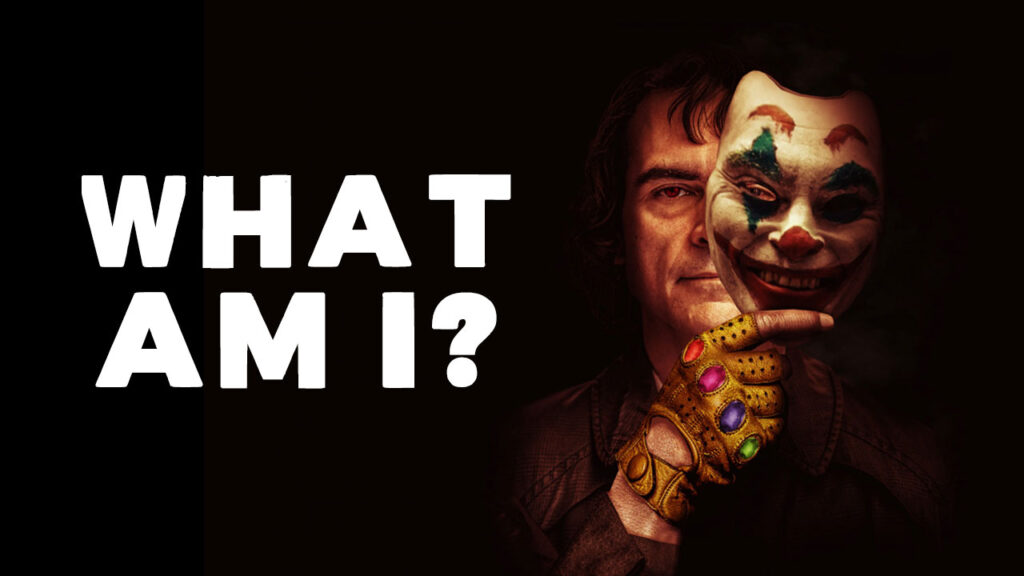
In this podcast, we will explore the fundamental question of our existence, what am I? When Westerners first started translating ancient Eastern texts, this question was framed incorrectly into “Who am I?” which has affected our way of understanding the depth of Eastern philosophy. Hinduism, Buddhism, and Taoism are spiritual paths designed to go beyond the person, beyond the “Who am I” to the fundamental question of What am I? This subtle transition of thinking takes us to the deepest level of our existence where the I itself disappears. What remains when the dissolution of I occurs? We will attempt to answer this fundamental question. NOTE: This site directs people to Amazon and is an Amazon Associate member. As an Amazon Associate I earn from qualifying purchases, at no additional cost to you. The pages on this website may contain affiliate links, which means I may receive a commission if you click a link and purchase something that I have recommended. This goes a tiny way towards defraying the costs of maintaining this site.
How Lao Tzu, the Buddha, and Ramana Maharshi Would Raise a Child in the Modern World
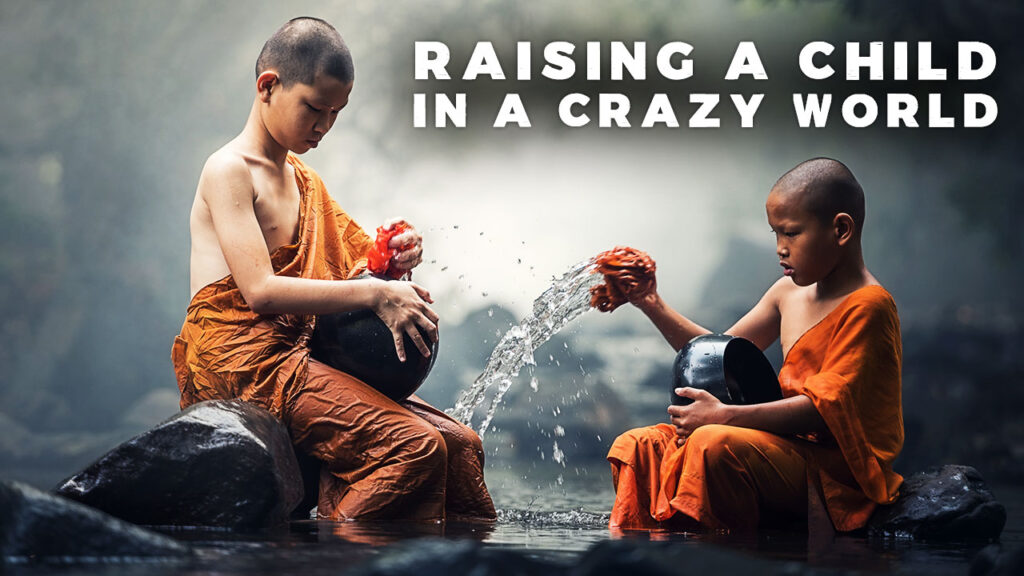
Many people on the spiritual path are often perplexed as how to raise a child in the modern world, considering all of the falseness and hypocrisy that has become our materialistic culture. This is something I’m sure we all struggle with and I know many people who have children struggle to raise a child in such a false world. In this episode of Ask Jason, I will answer an interesting question about how Lao-tzu, the Buddha, and Ramana Maharshi would raise a child in the modern world. NOTE: This site directs people to Amazon and is an Amazon Associate member. As an Amazon Associate I earn from qualifying purchases, at no additional cost to you. The pages on this website may contain affiliate links, which means I may receive a commission if you click a link and purchase something that I have recommended. This goes a tiny way towards defraying the costs of maintaining this site.
The Power of Renunciation in a Crazy World
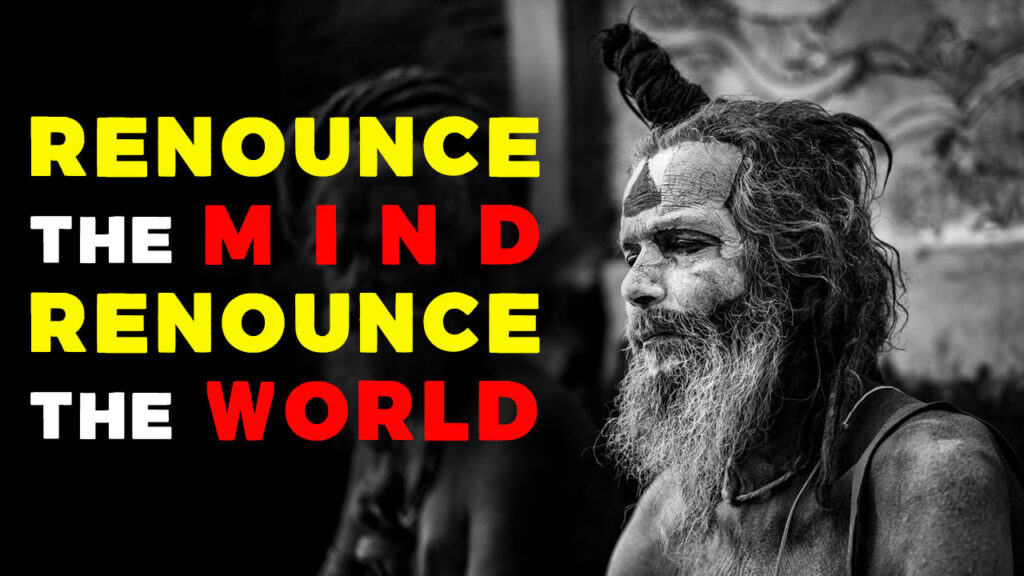
In this podcast, we will explore the path and practice of renunciation in the Eastern spiritual traditions. Renouncing the world is often thought of negatively by people who feel we should acquiesce to a role and be part of society. But the problem with this form of social submission is it is counterproductive to one’s spiritual process if one has not been sufficiently trained in the meditative practices and philosophy of any of the great Eastern traditions. Essentially, socialization impedes spiritual progress. This is why the great masters headed for the mountains to live in harmony with nature. But it was not only this form of renunciation that was a central practice in the East because in the end, the ultimate renunciation of worldliness is an internal process that begins when we begin to renounce our own mind, which coincidentally is the world. Find out how your mind is the world. NOTE: This site directs people to Amazon and is an Amazon Associate member. As an Amazon Associate I earn from qualifying purchases, at no additional cost to you. The pages on this website may contain affiliate links, which means I may receive a commission if you click a link and purchase something that I have recommended. This goes a tiny way towards defraying the costs of maintaining this site.
The Secret of Meditation
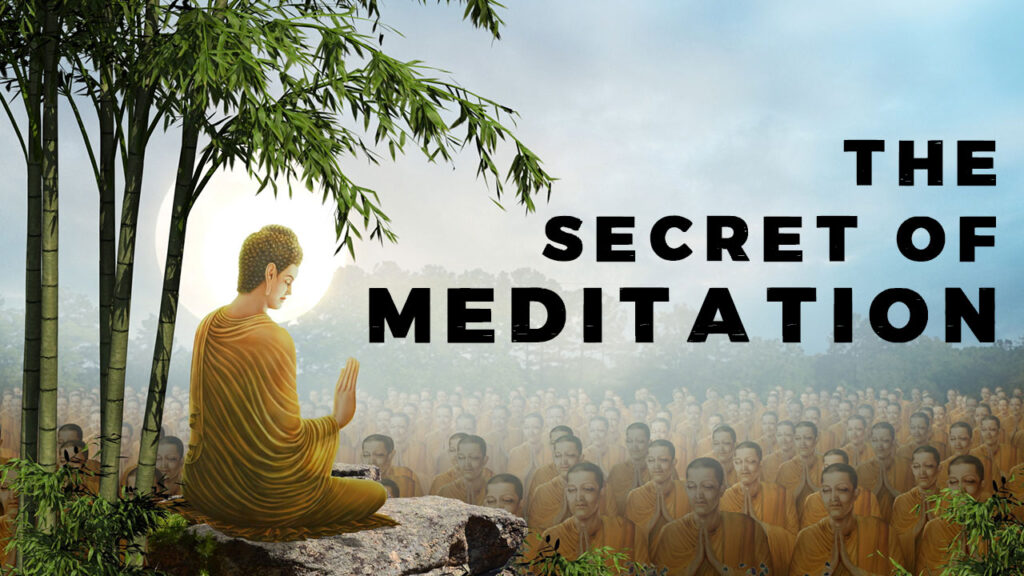
In this episode of Enlightenment Today, I will explain the secret of meditation. Meditation has become a useful tool for people in their people lives. We think of it as a way to manage stress and something that helps us deal with the uncertainty of life. Though these benefits are great and true, there is a secret to meditation that only usually serious practitioners of the Eastern spiritual traditions discover and understand. What is that elusive secret? NOTE: This site directs people to Amazon and is an Amazon Associate member. As an Amazon Associate I earn from qualifying purchases, at no additional cost to you. The pages on this website may contain affiliate links, which means I may receive a commission if you click a link and purchase something that I have recommended. This goes a tiny way towards defraying the costs of maintaining this site.
Jiddu Krishnamurti, David Bohm, and the Oneness of Reality
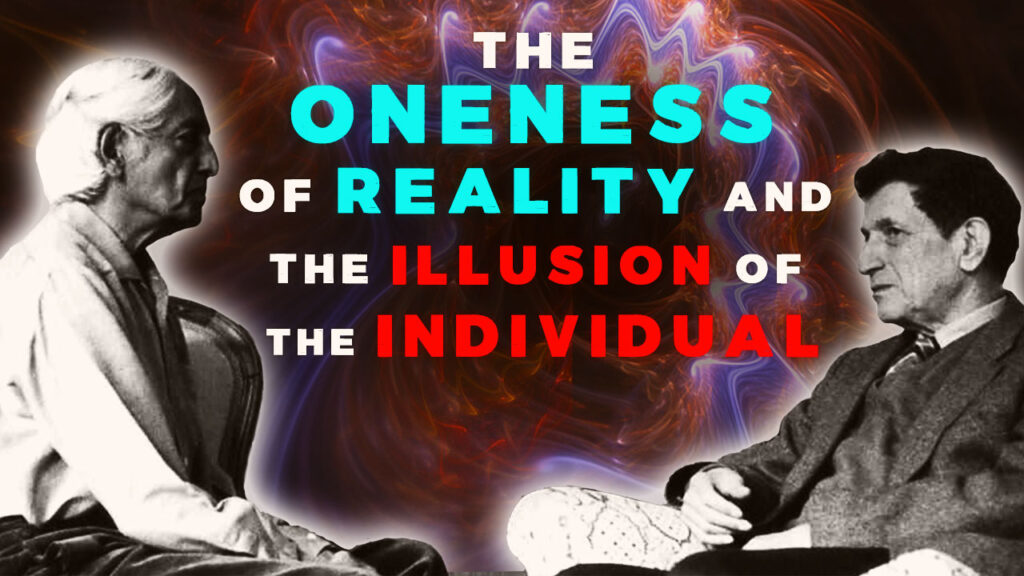
In this podcast, we will explore the teachings of Jiddu Krishnamurti and David Bohm. Both Krishnamurti and Bohm dedicated their lives to understanding the oneness of reality from a philosophical and scientific viewpoint. Their groundbreaking work brings to light the view of the Eastern spiritual traditions that the individual is an illusion, albeit a persistent one. We dive deep into both of their lives and teachings, guiding one to understand the oneness of reality and how the experience of that reality is eclipsed by our sense of individuality. NOTE: This site directs people to Amazon and is an Amazon Associate member. As an Amazon Associate I earn from qualifying purchases, at no additional cost to you. The pages on this website may contain affiliate links, which means I may receive a commission if you click a link and purchase something that I have recommended. This goes a tiny way towards defraying the costs of maintaining this site.
The Concept of Evil and Universalism in Taoism, Buddhism, Jainism, and Hinduism
In this podcast, we will explore the concept of evil and Universalism from an Eastern spiritual perspective. There is a common Western view that the concept of evil is a universal concept in all of the world’s spiritual traditions. This view began when Westerners started to translate Eastern spiritual scriptures through their own Western individualistic oriented cognition which is based on one life and not the Eastern view of many lives. Universalism essentially began with the Western cultural assumption that evil exists and is inherent within some individuals. But are Western cultural assumptions related to Eastern culture? Do they even exist in the East? Find out! NOTE: This site directs people to Amazon and is an Amazon Associate member. As an Amazon Associate I earn from qualifying purchases, at no additional cost to you. The pages on this website may contain affiliate links, which means I may receive a commission if you click a link and purchase something that I have recommended. This goes a tiny way towards defraying the costs of maintaining this site.