Spirituality Does Not Need Science (Sadhguru is wrong)
In this episode of Enlightenment Today I will speak about how the great spiritual traditions of the East are complete systems in and of themselves without any need for a validation from modern science. Influential teachers such as Sadhguru and the Dalai Lama sing praise about their ancient knowledge because science is now validating the ancient spiritual knowledge of Eastern spirituality, as if this now validates thousands of years of knowledge and wisdom on the nature of the universe and consciousness. But Eastern spirituality has their own systems of thought (especially ancient Indian knowledge) that have no need for science because it has its own system of thought based on materialism. And it is ironic that science is actually now turning to Eastern thought for a deeper understanding of the universe and the nature of consciousness. Ancient Eastern knowledge is far ahead of science in regards to the nature of the universe, mind, consciousness, and the mystery of pure awareness which is an experiential discovery of many Eastern spiritual traditions.
Zhuangzi on Oneness (learn to see the infinite in life)
In this episode of Enlightenment Today I will explain Zhuangzi’s natural philosophy of oneness. This is the ability to perceive the infinite in all things, which allows us to experientially feel the actual unity of life deep within our heart-mind. This is the Daoist (Taoist) vision of the universe which runs counter to the Western trained cognition of individualism and partiality. Zhuangzi explains how our analytical training blinds us to the oneness of the universe and this problem is only becomes worse because of analytical focused education. This is Zhuangzi’s natural understanding that life exists with no labels and the analytical training to discern between “this” and “that” is a human flaw which leads to a subjective viewpoint of right and wrong, and good and evil, which we all superimpose onto an objective reality which is actually the same for all. This incorrect perception is the seed of all conflict. To see reality as it truly is, in its infinite oneness, Zhuangzi advises us to fast the mind. Only then will our mind be cleansed and, as a result, the world will be at peace.
The Atman (The Nature of the True Self)
In this episode of Enlightenment Today I will give a thorough explanation of what the Atman truly is. There is a lot of misinterpretation and misunderstanding surrounding the knowledge of the Atman. When we say the Atman means the “true Self,” what does that “Self” actually represent? People with no prior training in Hindu thought, then, assume the true Self is related to a sense of agency or being (Jiva). This confusion between the Jiva and the Atman is prevalent in spirituality. But, as I thoroughly explain from traditional Vedanta knowledge, the Atman is the undifferentiated consciousness within all as one (Brahman), which is the foundation of nonduality. We need to rephrase the question of “Who am I?” (which implies a sense of agency/ego) to “What am I?”
Go Beyond Everything (Turiya)
Go Beyond Everything (Turiya) In the great Eastern spiritual traditions there is a special importance given to going beyond everything, essentially going beyond the world and even your own mind. This is the spiritual ideal of the great sages and teachings of the East. But this ultimate goal is something that frightens most people because they are not willing to truly give up their sense of “self.” People who become interested in spirituality forget this ideal. Sadly, people often subtly use spirituality to propagate their ego rather than dissolve it. This is especially rife in the West. The individualistic mind of the West has taken the holistic philosophies and practices of the East and turned them into something geared more towards self-interest and vanity rather than the dissolution of self, humility, and simplicity. To counter such widespread cultural appropriation, we need to understand what going beyond everything means and how and why we should really be aiming for those lofty heights previously only experienced by the great sages of antiquity. The Foundation of Consciousness Going beyond everything means you’ve come into resonance with the underlying witness of all life. This witness is the pure awareness at the core of our being that we cover over with worldly experiences, mundane concerns, and individual conditioning. This witness is not overly considered in Western religions, but it is the spiritual ideal of the East. The goal is to firmly re-establish yourself in this pure awareness which is untouched by all experience. So, the focus of this goal is not about the “experience,” but instead the experiencer. The pure witness (experiencer) of all internal and external movement. This witness resides in all experiences, no matter whether the experience is pleasurable or painful. The witness is a permanent feature of consciousness and is actually the foundation of consciousness. The surprising thing is not many people in science or Western religions focused a lot of attention on the witness and this might be an unintentional oversight considering that if you are not a deep explorer of your own consciousness then the experiencer will be overlooked in favor of the actual experience. Undifferentiated Consciousness Thankfully the great Eastern spiritual traditions revealed that the pure awareness of our being is the essence of consciousness. Yet each tradition explained this a little differently. In Vedanta to remain as the Atman, the undifferentiated consciousness, the Self with a capital S, means to abide in that witness state without letting the turbulence of worldly experience shake you. In Samkhya and classical Yoga, the more you reside in pure awareness, Purusha, you will begin to separate from all the movement of energy in the universe and mind, Prakrti. You develop an actual gap, where Purusha can look upon Prakrti without being affected by its gravitational pull. In Buddhism we have Tathata, a word which refers to someone who has arrived at suchness or thusness. This is the Buddha mind that has recognized the utter impermanence of the world and, as a result, their sense of self has thinned away into Sunyata, the voidness of the universe where suchness is revealed. This is the Buddha’s immovable state symbolized in the Bhumisparsha mudra. And lastly, in Taoism there is the Absolute Tao that animates all life through the yin and yang energies of the universe. The great Taoist sages Lao-tzu and Chuang-tzu explain how we can absorb our mind in Tao by emptying our mind and allowing life to be as it will without our individual interference. By following this process, you begin to merge with the Tao. Unassociated Bliss So, the common theme among all these great traditions is we should empty our faculties and instead of pursuing experience after experience, we should abide steadfast as the pure witness, the undifferentiated consciousness. And the promise of all the traditions is that abiding in pure awareness is actually the true key to happiness. Actually, they would say it leads to unassociated bliss, Ananda in Sanskrit. We’re often going from one experience to another trying to fill this emptiness we all feel inside, but it never leads to lasting happiness. The irony is ananda is not found in experience, but rather in dissolving the one who continually chases experiences. When we abide as the witness more and more and are not influenced by the activity of our mind, then we are in a state of bliss from not being a “person.” This is the advanced spirituality which is part of the higher religion of the East. This sort of knowledge is what separates Eastern spirituality from Western religions. Too often these days people think there is a radical universalism existing among all religions. What we have to understand is that all religions have their place, but they are not equally efficacious. There are some similarities but they are somewhat loosely connected when we study each tradition. Eastern spirituality is far more transformative and peace bearing because the whole ethos of the Eastern traditions is based on the study of consciousness to discover the nature of mind and the universe. And they’ve done a damn good job at explaining all of that and more. Turning Away from Worldliness Most importantly, they’ve given us the key to true knowledge of our nature. But this knowledge requires us to go beyond everything to experience our innate bliss. We have to turn our back on worldliness. This means we have to turn our back on worldly desires and any ambition we may have of becoming “someone.” This does not mean being apathetic because it is actually our personal agendas and individual conditioning which causes all the trouble in the world, so we seek to dissolve all that subjectivity to see the world from an objective viewpoint. Instead of indulging in the “I”-thought, we need to ask who is the experiencer of thoughts? Does the experiencer feel pain or pleasure? The
The Nature of Siddhis in the East
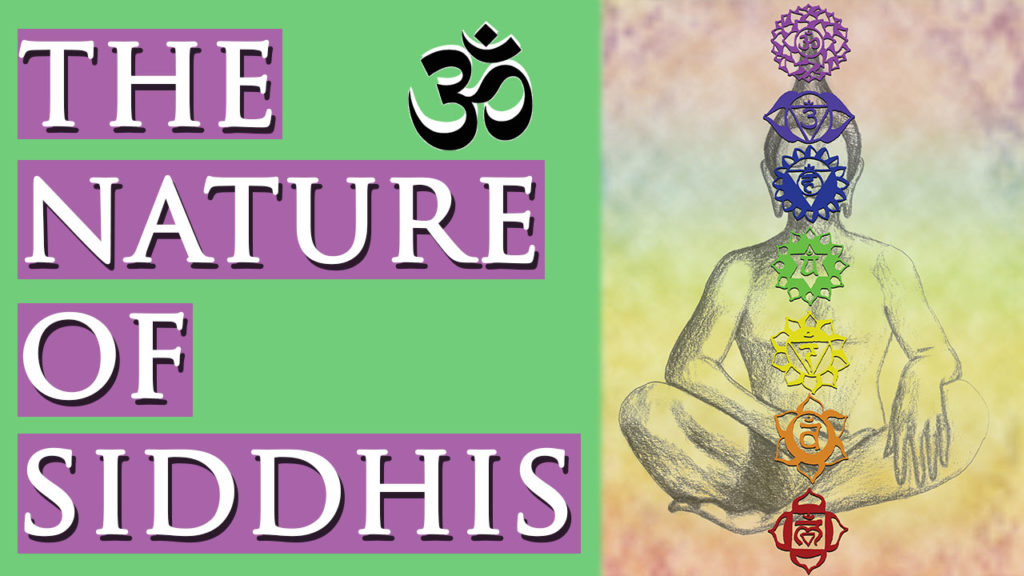
The Nature of Siddhis in the East The word siddhi is a Sanskrit noun which means attainment, accomplishment, perfection, power, realization, or success, in the sense of liberation or attaining magical powers. Siddhis are the magical powers or paranormal abilities attained through rigorous spiritual practice. In the Hindu sect of Shaivism they define siddhis as the “Extraordinary powers of the soul, developed through consistent meditation and often uncomfortable and grueling tapas, or awakened naturally through spiritual maturity and yogic sadhana.” (Tapas in Sanskrit means asceticism and sadhana in Sanskrit means spiritual exertion towards an intended goal). The modern day students of yoga and spirituality often dismiss siddhis and are naturally skeptical when it comes to this magical dimension. And I would say it is healthy to show some skepticism because there are many charlatans and fake gurus and yogis who depend on people believing they have paranormal abilities. But even though it is sane to be skeptical of such people, I am going to give the subject of siddhis an honest an open hearing based on the knowledge available. And, between Hinduism, Buddhism, and Jainism, there is a ton of information and texts about siddhis going back thousands of years. We also need to remember that the founder of classical yoga Patanjali dedicated a whole chapter to siddhis in the Yoga Sutras. The Nature of Siddhis This strong siddhi component in India and other parts of Asia originates from the archaic tradition of asceticism (tapas) and also Tantra, especially the hatha yoga element of Tantra. For thousands of years we’ve heard of world-renouncing yogins and sadhus who have attained access to this magical dimension. But keep in mind, Tantrism is concerned with siddhis both in the sense of ultimate liberation and also magical powers. Tantra affirms the phenomenal world and has a positive relationship with cultivating the innate psychospiritual potential within the body-mind system. Vedanta, on the other hand, dismisses siddhis for their own reasons which I will discuss shortly. Tantra regards siddhis as an advantage which allows us to reach our spiritual goals more fully. But, as with most things, there are two sides to each coin. For example, many practitioners of Tantra (tantrikas) will use these powers for less noble goals. Actually, there are whole texts composed to deal with these unsavory practices. And you still find tantrikas following this less noble path in India today. This less noble path is referred to as “lower Tantrism.” While, on the other hand, higher Tantrism is motivated by spiritual liberation and the spiritual upliftment of all beings, not just humans but also nonhuman beings. In the end, Tantric scriptures are focused on the higher element of liberation. Yoga and Tantra scriptures often mention siddhis as part of an accomplished adepts arsenal of skills. The relatively unknown text called the Yoga Bija states: “The yogin is endowed with unthinkable powers. He who has conquered the senses can, by his own will, assume various shapes and make them vanish.” The Yogashikha Upanishad also explains that siddhis are the mark of a true yoga adept. As a result, siddhis, according to the Yogashikha Upanishad, are encountered in the course of one’s own spiritual practice in the same way that a pilgrim passes by sacred spots on the way to the sacred city of Varanasi in India. The Yogashikha Upanishad also distinguishes two fundamental types of siddhis. First, the artificial which is called kalpita in Sanskrit. The second type is the nonartifical which is called akalpita in Sanskrit and means spontaneously arising. The artificial siddhis are produced by means of herbal concoctions, magic, mantra recitations, rituals, and alchemical elixirs. While the nonartificial spontaneous abilities spring from self-reliance. This natural spontaneous ability is thought to be pleasing to Ishvara. (Ishvara can mean God, the lord, a personal god, or the ultimate reality which is equal to the concept Brahman.) It is believed that these nonartificial spontaneous siddhis manifest in those who are free from desire. In the third chapter of the Yoga Sutras, Patanjali explains a long list of siddhis. This chapter is called the Vibhuti Pada. Vibhuti means manifestation or incarnation of powers and it probably stems from the Bhagavad Gita because it mentions Krishna’s far-flung powers. It is believed that a fully realized adept has access to these divine powers. She or he is known as a mahasiddha, which means great adept. These great adepts enjoy what is known as the mahasiddhis, which means great powers. In the Yoga Bhashya it refers to these great powers, commonly known in Hinduism as the Astha Siddhi, the eight great perfections. The Nine Great Powers There are actually nine great powers mentioned among various schools of thought. The first is Anima, which means miniaturization. This is the ability to reduce one’s size to the size of an atom. The second great power is Mahima, which means magnification. This is the ability to expand to an infinitely large size. It is believed you can become as large as a mountain, city, continent, and so on. But in the Mani Prabha text it defines Mahima as “pervasiveness.” This means it is not the physical body that expands but rather the subtle body or mind. The third great siddhi is known as Garima, which means becoming infinitely heavy. The fourth great power is Laghima, which means weightlessness or levitation. We are all familiar with the famous idea of levitating yogins. The fifth great power is Prapti, which means extension. This is the ability to be anywhere anytime according to your will. It is the ability to bridge great distances. This could be related to teleportation. The Yoga Bhashya seriously suggests a great adept can touch the moon with their fingertips if they have access to this power. The sixth great power is Prakamya, which means irresistible will. This is the ability to use your will as freely as you like. You can apparently realize whatever you desire. The Yoga Bhashya explains that
What we are capable of usually gets discovered.
When, while the lovely valley teems with vapor around me, and the meridian sun strikes the upper surface of the impenetrable foliage of my trees, and but a few stray gleams steal into the inner sanctuary, I throw myself down among the tall grass by the trickling stream; and, as I lie close to the earth, a thousand unknown plants are noticed by me: when I hear the buzz of the little world among the stalks, and grow familiar with the countless indescribable forms of the insects and flies, then I feel the presence of the Almighty, who formed us in his own image, and the breath of that universal love which bears and sustains us, as it floats around us in an eternity of bliss; and then, my friend, when darkness overspreads my eyes, and heaven and earth seem to dwell in my soul and absorb its power, like the form of a beloved mistress, then I often think with longing, Oh, would I could describe these conceptions, could impress upon paper all that is living so full and warm within me, that it might be the mirror of my soul, as my soul is the mirror of the infinite God! O my friend — but it is too much for my strength — I sink under the weight of the splendor of these visions! A wonderful serenity has taken possession of my entire soul, like these sweet mornings of spring which I enjoy with my whole heart. I am alone, and feel the charm of existence in this spot, which was created for the bliss of souls like mine. I am so happy, my dear friend, so absorbed in the exquisite sense of mere tranquil existence, that I neglect my talents. I should be incapable of drawing a single stroke at the present moment; and yet I feel that I never was a greater artist than now. When, while the lovely valley teems with vapor around me, and the meridian sun strikes the upper surface of the impenetrable foliage of my trees, and but a few stray gleams steal into the inner sanctuary, I throw myself down among the tall grass by the trickling stream; and, as I lie close to the earth, a thousand unknown plants are noticed by me: when I hear the buzz of the little world among the stalks, and grow familiar with the countless indescribable forms of the insects and flies, then I feel the presence of the Almighty, who formed us in his own image, and the breath of that universal love which bears and sustains us, as it floats around us in an eternity of bliss; and then, my friend, when darkness overspreads my eyes, and heaven and earth seem to dwell in my soul and absorb its power, like the form of a beloved mistress, then I often think with longing, Oh, would I could describe these conceptions, could impress upon paper all that is living so full and warm within me.
What we are capable of usually gets discovered.
When, while the lovely valley teems with vapor around me, and the meridian sun strikes the upper surface of the impenetrable foliage of my trees, and but a few stray gleams steal into the inner sanctuary, I throw myself down among the tall grass by the trickling stream; and, as I lie close to the earth, a thousand unknown plants are noticed by me: when I hear the buzz of the little world among the stalks, and grow familiar with the countless indescribable forms of the insects and flies, then I feel the presence of the Almighty, who formed us in his own image, and the breath of that universal love which bears and sustains us, as it floats around us in an eternity of bliss; and then, my friend, when darkness overspreads my eyes, and heaven and earth seem to dwell in my soul and absorb its power, like the form of a beloved mistress, then I often think with longing, Oh, would I could describe these conceptions, could impress upon paper all that is living so full and warm within me, that it might be the mirror of my soul, as my soul is the mirror of the infinite God! O my friend — but it is too much for my strength — I sink under the weight of the splendor of these visions! A wonderful serenity has taken possession of my entire soul, like these sweet mornings of spring which I enjoy with my whole heart. I am alone, and feel the charm of existence in this spot, which was created for the bliss of souls like mine. I am so happy, my dear friend, so absorbed in the exquisite sense of mere tranquil existence, that I neglect my talents. I should be incapable of drawing a single stroke at the present moment; and yet I feel that I never was a greater artist than now. When, while the lovely valley teems with vapor around me, and the meridian sun strikes the upper surface of the impenetrable foliage of my trees, and but a few stray gleams steal into the inner sanctuary, I throw myself down among the tall grass by the trickling stream; and, as I lie close to the earth, a thousand unknown plants are noticed by me: when I hear the buzz of the little world among the stalks, and grow familiar with the countless indescribable forms of the insects and flies, then I feel the presence of the Almighty, who formed us in his own image, and the breath of that universal love which bears and sustains us, as it floats around us in an eternity of bliss; and then, my friend, when darkness overspreads my eyes, and heaven and earth seem to dwell in my soul and absorb its power, like the form of a beloved mistress, then I often think with longing, Oh, would I could describe these conceptions, could impress upon paper all that is living so full and warm within me.
What we are capable of usually gets discovered.
Yugas: The Hindu Map of Time
Yugas: The Hindu Map of Time The Eastern view of time is completely different to the Western view. A perfect example of this is the Hindu time system called the Yugas. The word yuga in Sanskrit means age, cycle, or world era. The yugas are a complex world-age doctrine of four ages. The yugas map the cycles of change within the universe and consciousness. The yugas build a solid framework for understanding how we experience time and eternity, and how they are related to one another. This way of thinking is completely different to the view of time and eternity held firm by Western religions and the West in general. The Western view of time is linear and this effect’s the Western view of eternity, as the idea of an eternal “heaven” becomes something we have to wait for until after death. This Western concept implies that eternity is bound to time. This is ridiculous considering eternity can only be ever-present in this very moment and can only be experienced when limiting thoughts and thinking have completely ceased. The Eastern view of eternity illustrates that eternity can be nowhere else but in this present moment, and a lot of their time systems and philosophies are based on it. As a result, the relationship between time and eternity is thought of very differently in the East, especially in the yuga system. Many Eastern traditions don’t map time in the linear sense, but instead, they designed systems to understand time’s nonlinear qualities in relation to matter, mind, and spirit. In Hinduism, the nonlinearity of time is broken into the yuga cycles, which map the consciousness that drives the process of linear time fueling human civilization. Kalpa There are two yuga systems that are somewhat similar, but also a lot different. There is an ancient long-count system and a more recent short-count system. Both systems are based on the concept of kalpa. Kalpa is a Sanskrit word that means aeon in Hindu and Buddhist cosmology. A kalpa equals 4.32 billion years. This massive period of time is not about lifetimes or an age, but rather the life of Earth. The concept of kalpa is described in the ancient texts of the Puranas, especially the Vishnu Purana and Bhagavata Purana. One kalpa of 4.32 billion years is regarded as a day of Brahma. If you think this is a long time, a mahakalpa consists of 100 years of Brahma which is 313, 528, 320, 000, 000 years. The Long-count Yuga System In the long-count system one kalpa is made up of one hundred mahayugas (great yugas). The duration of a mahayuga is built on a system of four yugas. These yugas are Satya Yuga, which is the ideal or truthful age spanning 1,728,000 years. Next is Treta Yuga, which is the age where virtue has declined by a quarter of Satya Yuga. Treta Yuga spans 1,296,000 years. Treta Yuga is followed by Dvapara Yuga. Dvapara Yuga is the age where virtue is reduced by half of what it was in Satya Yuga. Dvapara Yuga spans 864,000 years. The last yuga, and we could say definitely the least, is Kali Yuga. Kali Yuga is where virtue is reduced to a quarter. Thankfully in the greater scheme of things, Kali Yuga only spans the time of 432,000 years. Well, I know it’s still a long time, but in the universal sense it’s quite small. According to the long-count system what yuga are we in right now? It is commonly believed we are in the heart of Kali Yuga. According to the dates suggested by authorities, we might only be at the beginning of this yuga. It is believed that the dark age of the Kali Yuga commenced with the death of the Godly sage Krishna after the famous battle in Kurukshetra, documented in the Mahabharata epic. Traditional Hindu authorities put this date at 3102 BCE. Though many scholars dispute this date, as they believe a date of around 1500 BCE is more probable. Nevertheless, if we are to take the yuga world-age doctrine seriously, we are only at the beginning of the Kali Yuga. We’ve been on this long descent from the golden age of the Satya Yuga until now. This slow process spanning millions of years stupefied our mind into the characteristic of Kali Yuga. The Character of the Kali Yuga What is the characteristic of the Kali Yuga? The core characteristic is our minds identification with the external world and a turning away from the inner world. This is where we focus on everything in the outside world and forget about the inner world. We focus on how we look, our anxiety about how we are perceived by others, our reliance on sensory needs, our dependency on relationships, our over attachment to people and material possessions, and our focus on acquiring assets to promote our own self-interest. The Kali Yuga, then, is basically the involution of the human mind into gross matter, which means our mind is entangled with the outside world. Materialism, then, is the heart of the Kali Yuga. The minds tendency in this age is geared towards consumerist thinking. Consumerism becomes the accepted way of life in this age. And it is hard to argue with this ancient view of the Kali Yuga when we look outside and see what mainly drives people. The lowest point of the Kali Yuga might be technological transhumanism, as many people would rather be a robot and live forever than a natural human. The integration of mind into technology will likely be the lowest point of the Kali Yuga, if it happens. This technological motivation is the Kali Yuga belief that the material universe is everything. As a result, the inner world of consciousness is not considered valuable without the material world. This type of thinking is one of the greatest threats to the survival of human race. So before you play unconsciously with your phone, ask yourself what that habit is doing to you and how is it training your mind to be. I find
My Top 5 Books of 2018
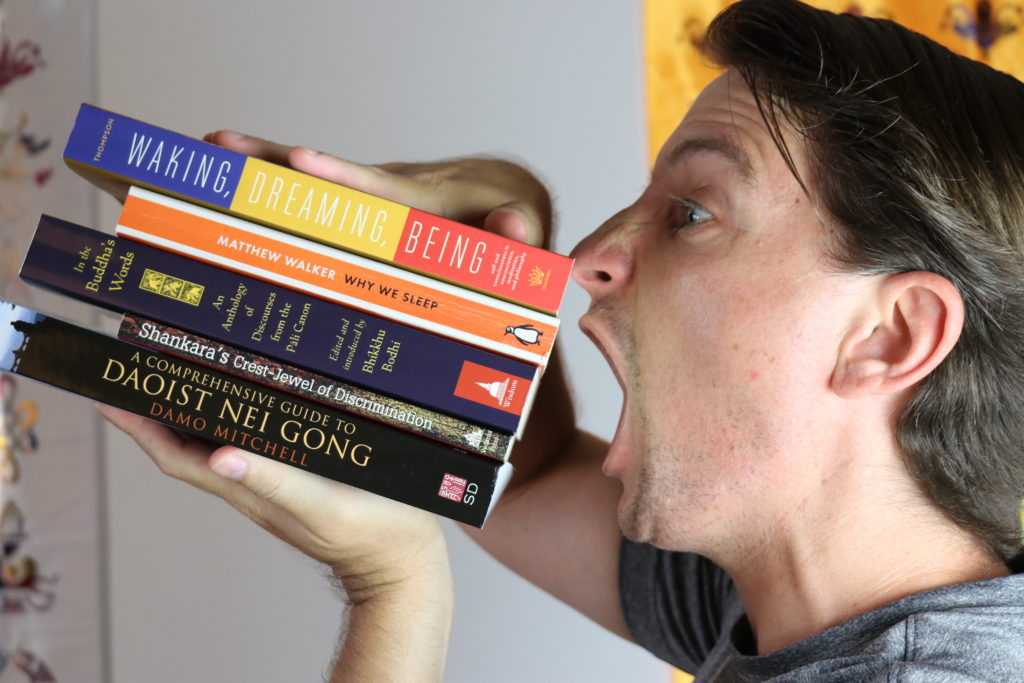
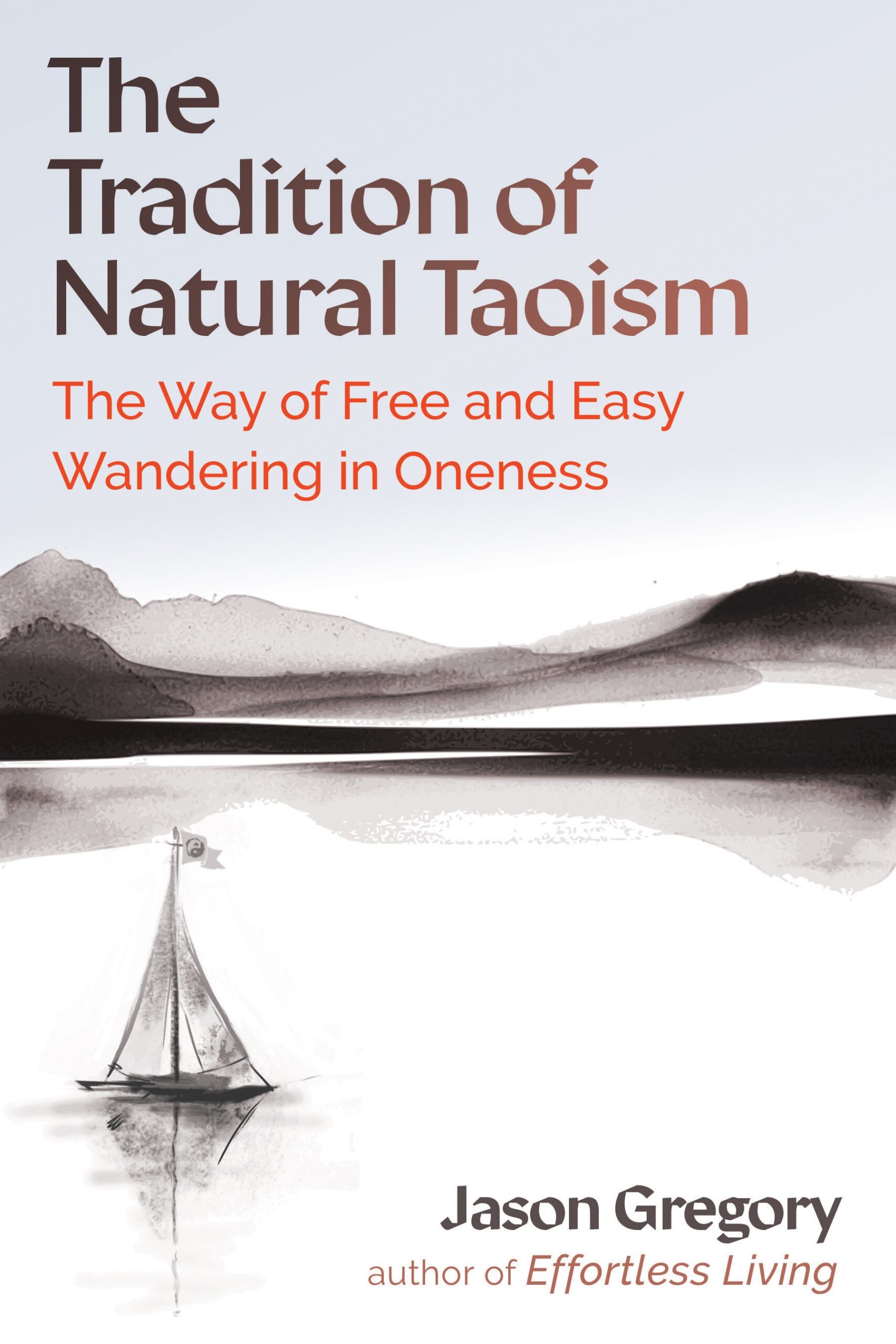
My Top 5 Books of 2018 There were so many superb books in 2018 but enough time to get through all of them. And I’m not one to waste time, so that means there were a truckload of great books. Many in-depth books on consciousness studies surfaced in 2018, along with some breakthrough books on spirituality, philosophy, psychology, and optimal performance (including my own book Effortless Living). Last year I mentioned to you how I aspire to read at least 10 books a year and explained that you should also try and hit the target of 5-10 books, as this shows you have not been wasting your time on things that don’t matter. Instead you have invested in yourself. Please let me know in the comments section if you reached this target. Without further ado here are my top five books of 2018 (not all published in 2018). Waking, Dreaming, Being: Self and Consciousness in Neuroscience, Meditation, and PhilosophyBy Evan Thompson This is one of the most unique and important books of our time (and maybe beyond our time). I discovered this book in a most unlikely place, it was recommended by Swami Sarvapriyananda. You would never think a Hindu Swami would recommend a book on Western neuroscience. But this is what makes Thompson’s book different to the rest. Thompson himself was brought up on Eastern philosophy, especially Buddhism. But the link between Sarvapriyananda and Thompson is that in Waking, Dreaming, Being the organizing principle comes from the first recorded map of consciousness found in the ancient Indian texts known as the Upanishads. According to the Upanishads there are four states of consciousness. There are the common states of waking, dreaming, and dreamless sleep, and then there is the fourth states of pure awareness (turiya) which is found in the Mandukya Upanishad, arguably the most important Upanishad for that fact. This idea of pure awareness pervades Eastern thought, even Buddhism. Modern science, and most people in general, assume that consciousness has a biological origin, most likely in the brain. But contemplatives in the East have studied consciousness for thousands of years and believe that pure awareness is not located in our brain, it has no physical origins (what philosopher David Chalmers calls the “hard problem” of consciousness). This is where Thompson’s experience as a Western philosopher and scientist along with his years of studying the great Eastern traditions are all beneficial. He goes into detail and makes a claim for both sides, is the idea of pure consciousness still a phenomenon of the brain or is it beyond the physical world. In the end, he offers some of the most unique research and insights on the subject of pure awareness in Eastern philosophy. Why We Sleep: Unlocking the Power of Sleep and DreamsBy Matthew Walker This is one of the most important books for the modern busy world, especially in regards to our health and sanity. Too often people will neglect their sleep to be more successful and get more done. But all this actually does is diminish your chances of being successful and getting more done, as Matthew Walker scientifically points out in his book. People never associate their stress and illnesses with a lack of sleep, as this is an area of research that has been avoided for far too long. Thankfully, Walker has taken the time and effort to scientifically prove to us the benefits of sleep for our health, sanity, and longevity. After reading his wonderful book, you will have no other option but to prioritize your sleep because it is the foundational pillar of everything else we experience in life. As Walker suggests, don’t be afraid to drift off to sleep while reading. It is normal to rest and sleep, don’t fight it. In the Buddha’s Words: An Anthology of Discourses from the Pali Canon (The Teachings of the Buddha)By Bhikkhu Bodhi This is the foundational text for Buddhist studies and for those who practice Buddhism or are interested in learning. It is the most important Buddhist text to read for any school of Buddhism because it is the original Pali Canon, the actual discourses of the historical Buddha. This book gives you an insight into early Buddhism and the Theravada school of Buddhism. Most people will likely not start with this book when they begin their Buddhist studies, but in an ideal world this book would be the first book you should read on Buddhism and the Buddha. This book will give you a taste of what it is like to read the ancient suttas (sutras) with their unique repetitive style (this may be laborious for those unfamiliar with the sutta repetitive style). And Bhikkhu Bodhi has done a tremendous job with the translation and commentary which makes for an enjoyable and enlightening read. All of his translations sparkle with clarity and wisdom, but none so more than this amazing book. So if you are interested in the wisdom of the Buddha then begin here to build a solid foundation for your future studies. Shankara’s Crest Jewel of Discrimination (Vivekachudamani) By Swami Prabhavananda Shankara’s Vivekachudamani (Crest-Jewel of Discrimination) is a pure transmission of the nondual teachings of Vedanta. In some sense, Shankara lays out the nondual teachings of Advaita Vedanta more clearly for everybody than the Upanishads, Bhagavad Gita, and Brahma Sutras. This is because not everybody can grasp the mystical depth of the three main texts of Vedanta. But even though the three main texts of Vedanta are more more important to read and contemplate long-term, the Vivekachudmani is an extension of them and a great explanation of them, especially for people new to Vedanta. Shankara had a wonderful ability to see into the heart of Vedanta and bring back this jewel of wisdom from the eternal ocean of Brahman to the shores of our world. A Comprehensive Guide to Daoist Nei Gong By Damo Mitchell Back in 2015 in my home in Tiruvannamalai and then