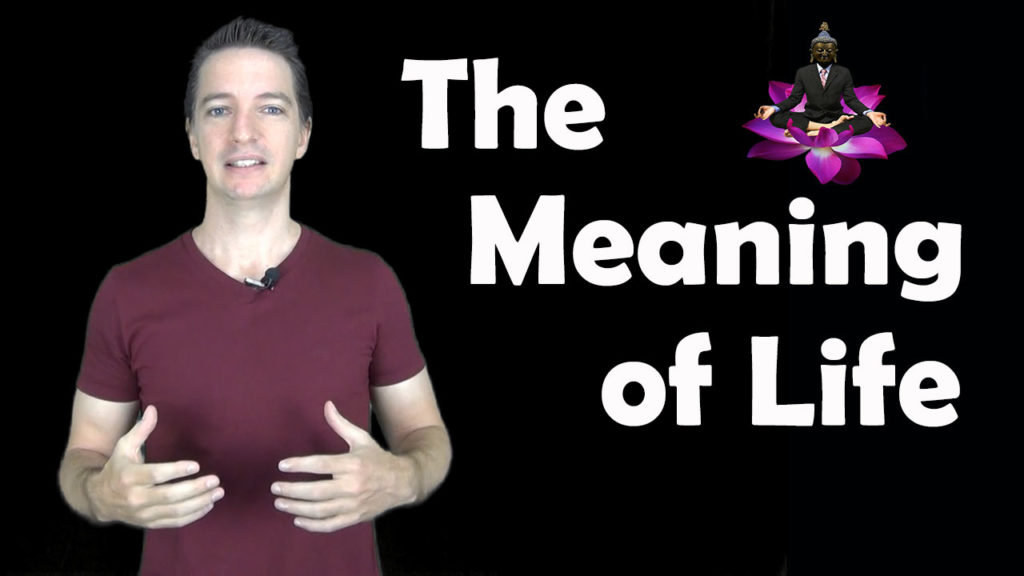
The Meaning of Life
In this episode of Enlightenment Today we explore the meaning of life. We will weigh in on the debate as to whether or not life has a fundamental meaning. We will uncover this misconception from the Eastern perspective which reveals that all of our attempts to make an intellectual interpretation of life and our delusion that we are more special than anything else in nature disconnects us from nature and contributes to a temperament where a battle of man versus nature ensues to the point of ecological crisis and the downfall of the human race.
What is the Soul?
In this episode of Enlightenment Today we will explore the nature of the Soul from the Eastern perspective. We unpack the science behind reincarnation known as the Wheel of Samsara Framework which tries to explain what it actually “is” that comes back life after life. This is a comprehensive system for understanding the subconscious root conditioning, latent tendencies, and unconscious actions of our mind. It also explains methods of how to eventually make them conscious so that we transform our mind at the root level with the Eastern view of transcending our soul.
Chuang-tzu
In this episode of Enlightenment Today we will explore the philosophy and wisdom of the Taoist sage Chuang-tzu. We will go into the depth of Chuang-tzu’s philosophy and explain its relevance for the modern world. The philosophy of Chuang-tzu reveals a latent wisdom found within the embodied skill of a craftsman. Their embodied skill is a metaphor about how to live our lives effortlessly every day with a mind of no deliberation. We will explain Chuang-tzu’s ultimate method of ‘fasting the mind’ which is a strategy to bring about this natural state of an effortless mind which writers, painters, musicians, athletes, martial artists and so on, all try to embody. Though, the wisdom of Chuang-tzu is to take that state of consciousness out of the craft and transfer it over to every moment in life. Recommended Reading The Complete Works of Chuang Tzu http://amzn.to/2hFc1Kt The Way of Chuang Tzu http://amzn.to/2z3VyGJ Trying Not to Try http://amzn.to/2B8ouPx Tao: The Watercourse Way http://amzn.to/2hNGB8x
Irrational Man by Woody Allen
In this episode of Enlightenment Today we will explore the Eastern philosophical view within the Woody Allen film Irrational Man. We will go into the benefits and naturalness of the irrational view over being too rational which is a way of life and cognitive state embraced in the East and evident within this film. Recommended Viewing Irrational Man http://amzn.to/2B8D4GK
Zen
In this episode of Enlightenment Today I will explore Zen. We will go into Zen’s origin, history, and ultimately what the Zen mind is. We reveal that the experience of Zen is the natural state of mind. The experience and practice of Zen reestablishes the connection between the body and mind which evokes the natural function of naturalness and intelligent spontaneity within the human organism. Recommended Reading The Way of Zen http://amzn.to/2B8mpmH The Lankavatara Sutra http://amzn.to/2hIHhsc The Zen Teachings of Bodhidharma http://amzn.to/2hRoK0m Zen and the Psychology of Transformation http://amzn.to/2hQxPqm The Complete Works of Chuang Tzu http://amzn.to/2z3U7Il Zen Mind, Beginner’s Mind http://amzn.to/2z4Lxcn Silence http://amzn.to/2BascYS
Yoga
In this episode of Enlightenment Today I will explore the spiritual tradition of yoga. We will expose the materialism behind the modern movement of yoga so that people can understand that yoga has nothing to do with exercise or looking physically fit. We will go deep into the tradition of yoga, its origins, philosophy, and its practice that were devised to reveal the nature of consciousness and liberate the mind from suffering. Recommended Reading The Yoga-Sutra of Patanjali http://amzn.to/2B5WSKR The Yoga Tradition http://amzn.to/2B7YinW The Psychology of Yoga http://amzn.to/2hPSpqU
The Geography of Mind
In this episode of Enlightenment Today I will explore the geography of mind. I will expose the myth that all people cognitively think the same. To do so I will study the history of how the mind of the East and West evolved differently. This will reveal why many Westerners and modern Easterners often misinterpret Eastern philosophy. This will give us greater understanding of the authentic teachings of the East. Recommended Reading The Geography of Thought http://amzn.to/2z4GlW7
Footsteps of the Masters India Tour with Jason Gregory 2018

FOOTSTEPS OF THE MASTERS INDIA TOUR with Jason Gregory November 26-December 8, 2018 In 2018 you can travel with author and teacher of Eastern philosophy Jason Gregory on a mystical tour of India to explore and trace the Footsteps of the Masters. Get unique insights into Jason’s knowledge of the East and the memory of the masters and scared places we will visit. Jason wishes to take people to the most sacred places of India to show that the ancient Hindu and Buddhist cultures are thriving but can only be experienced by those willing to join him on this pilgrimage of the heart. 1. About our tour to India: Our 13-day itinerary includes visits to the most beautiful and mystical places in India. We will travel through India to visit the most important sacred places of Indian history. Most people never get the chance to experience face to face the archaic origins and sites of Hindu and Buddhist culture because they are in some of the most remote places of India. But on this journey you will get that once in a lifetime opportunity to actually feel the ancient living culture that is still thriving in the sacred places we will visit. You will also get the chance to meet real life mystics and mingle with the beautiful people of India. What is more, during the tour you will take part in private lectures given by Jason Gregory. He will show us the significance of how Eastern thought can help us live more harmoniously in the modern world. He strongly believes that the mystics of the East who expounded especially the Hindu philosophy of Vedanta, Zen in Buddhism, and Taoism are advanced philosophical and spiritual frameworks that give us understanding and guidance in our ordinary lives. And this is the reason for joining Jason Gregory on his tour to India to follow the Footsteps of the Masters. This will be a once in a life-time experience, this tour may never happen again! Jason Gregory about our India tour: “I have spent several years in India and the experience has changed the entire course of my life. I continue to go back and visit every year, especially the Tamil Nadu and Bihar states as they include the two places in the world that I believe everybody should visit, Tiruvannamalai and Bodh Gaya, and we will be visiting both places on this tour. I have always told people that India is hard to explain, the attraction people have to it, and its transformative ability on an individual. It is a place that most people dislike because of real life hardships that people witness in her. But I have always implored people to persevere with her grace because if you can get past all the things that push you out of your comfort zone, there is an underlying essence of spirit that is only found in India, but you need to give her time and be open to new experiences. Many believe this comes from thousands of years of people focused on the inner realm of spirituality that has led to many great sages and stories of enlightenment in India. On this tour I want to allow people to experience this living spirit that we feel when we are in the culture of India by following the footsteps of the masters. My experience of living in India for several years allows me to take you on an insider’s journey of India on this tour where you will come face to face with her archaic soul.” Jason Gregory is a spiritual philosopher, independent scholar, author, writer, public speaker, and teacher specializing in the fields of Eastern philosophy, Western esotericism, comparative religion, psychology, culture, and ancients civilizations. He is the author of the highly acclaimed Effortless Living, Fasting the Mind, Enlightenment Now, and The Science and Practice of Humility. Jason spends his time traveling, writing, and teaching around the world through his lectures and workshops centered on his work. His lectures and workshops are said to be one of the most insightful and inspirational events one can attend, as he reveals through his work that enlightenment is not an end goal that we are searching for, but instead a way of life which is an art of living. This understanding leads to the essence of his work that enlightenment evokes a humility which is a universal science. 2. ITINERARY Day 1 – Arrival to New Delhi (November 26, 2018) Arrival at Indira Gandhi International Airport. A representative of “One World Within Tours” company will welcome our guests at the Indira Gandhi International Airport and transport them to our hotel. After the check-in process at the hotel, our guests will have time to rest. In the evening we will have dinner and an organizing meeting with “One World Within Tours” company’s staff. Overnight stay at the hotel in New Delhi. Day 2 – Travel from New Delhi to Bodh Gaya (November 27, 2018) We will leave our hotel in New Delhi in the morning and we will fly to Patna, the capital city of Bihar. We will then travel by private bus from Patna airport to Bodh Gaya in the afternoon. Day 3 – Bodh Gaya (November 28, 2018) Bodh Gaya is considered one of the most sacred places on the planet. It is famously known as the place where Gautama the Buddha reached enlightenment under what became known as the Bodhi Tree. Over millennia temples and monasteries have been built around the famous Bodhi Tree. The Mahabodhi Temple and Bodhi Tree reside on the same site and is one of the most powerful places one could visit. It is a holy place for Buddhists, Hindus, and people who are not affiliated with no religion but class themselves as spiritual. On our first day in Bodh Gaya we will rise very early and meditate under the Bodhi Tree and spend a lot of time in the complex of the Mahabodhi Temple discussing its significance to the world. Day 4 – Bodh
Fasting the Mind Retreat November 10-21, 2018

About the Fasting the Mind Retreats The fasting the mind retreat directly impacts your habits and way of being in the world to create peace and calmness in your life as well as allow you to build a firm psychological defense against the increasing bombardment of distractions in our world. The retreats are held by philosopher and spiritual teacher Jason Gregory. The retreat is designed to fast your mind, healing the mind at the root level. The ancient practice of fasting the mind is based on the great spiritual traditions from the East. Fasting the mind is completely different to fasting the body. Fasting the mind is about eliminating all external distractions from your life and also your habit to overthink so your mind can reach equanimity, revealing the deeper nature of yourself. The practice of fasting the mind repairs the nervous system and heals cognitive impairment. The practice of mind fasting is the most skillful method to deal with your subconscious, effecting your action and habits. This ultimately transforms the subconscious to better your life. You will learn the mind fasting practices and daily habits to take back into your everyday life. You will learn how to nourish the four fundamentals of meditation, exercise, diet, and sleep. Jason will give you the tools to cultivate intelligence and harness creativity. The retreat is designed for everybody because the fasting the mind practice is essential for taking your foot off the accelerator in your actively busy life. The time spent on the fasting the mind retreat is perfect for those who suffer from the busyness of life and also people with mental health issues such as depression, chronic anxiety and stress, and so on. The retreat is for those new to meditative practices and also advanced practitioners. From completely pressing pause on your busy life you begin to heal your mind and reach your full potential. What you will experience on the fasting the mind retreat will permanently impact your life. Are you ready for the ultimate fast? Retreat Features * 10 day retreat (Arrive November 10 for orientation and leave on November 21) * 4 hours meditation a day (40 hours for 10 days) * 2 hours walking meditation a day (20 hours for 10 days) * 3 days of complete silence (Day 2, 5, and 8) * 3 days of intermittent fasting (Only two meals from 12pm-6pm on day 2, 5, and 8) * Daily Qi Gong before the first morning meditation (Baduanjin qigong) * Mindful eating during each meal (no speaking or fidgeting while eating) * Daily lectures by Jason on Eastern philosophy, psychology, cognitive science, and health * Group discussion after daily lectures * Harness creativity and sustained focus through the practice of Chinese calligraphy * 3 meals a day based on a slow-carb vegetarian diet * Scheduled mindful meal preparations * Daily tea ceremonies using Taoist tonic herbs (caffeine free) * Cultivate intelligence through disciplined reading time using fasting the mind source material * Learn how to prioritize sleep * A complete digital detox Retreat Guidelines * No speaking unless in a group session guided by Jason * No digital devices or any electronics * No alcohol or drugs * No caffeine * No meat * No music * No contact with the outside world, including communication with family back home Where is the Fasting the Mind Retreat? The Fasting the Mind Retreat will be held in Tiruvannamalai, India. Tiruvannmalai is considered one of the most sacred places on Earth that has the ability to transform one’s life. It is known as the City of Enlightenment for that very reason. It has been the home to sages, sadhus, and yogis for thousands of years. Tiruvannamalai is home to the holy mountain Arunachala which is thought of to be an incarnation of Shiva. Arunachala is what drew the 20th century sage Sri Ramana Maharshi to this little Indian town, where he remained silent for 7 years up on the holy mountain in meditation. During his life at the foot of Arunachala disciples were attracted to his immense presence and an ashram was built around him, the famous Sri Ramana Asramam. It was here that Paul Brunton had his famous encounter with the Maharshi and consequently led to his international bestseller In Search of Secret India. This Hindu culture has never left this place, where you find sadhus descend on Tiruvannamalai every day renouncing the world to be at the foot of Arunachala and to also spend time in meditation at the Arunachaleswarar Temple (Temple of Shiva). Tiruvannamalai is steeped in the fasting the mind practice and method. Price and Payment Schedule * Price per person: $2200 USD (or equivalent in GBP/EUR/AUD) * Full price or $1000 USD (or equivalent in GBP/EUR/AUD) to secure your place * Full payment must be received by August 15, 2018 * After August 15, 2018 deposit or full payment are nonrefundable. This refund policy is in place because from August 15, 2018 all accommodation will be booked. There will be no refund after August 15, 2018 as a result. Price Includes * Jason Gregory as your retreat teacher * 11 nights’ accommodation (10 days retreat plus day of arrival and the day you leave) * All food and beverages on the retreat * Taxi from Chennai International Airport to the Fasting the Mind Retreat in Tiruvannamalai Not Included in the Price * International flight to India and return flight back to your country * Visas and insurance. The onus is on the retreat guests to ensure that passports, visas and other travel documentation are valid and in order During booking you should prepare personal details, date of birth, address, phone number, Email address, passport number, Passport Expiration Date (example mm/dd/yyyy). These details you should send to our Email: jasongregory@hotmail.com.au To secure your place hit this link: https://www.eventbrite.com/e/fasting-the-mind-retreat-november-10-21-2018-tickets-37326035176 We encourage you to book this retreat as soon as possible, because the retreat is designed for only 8 people! Please contact us for more information and for details – jasongregory@hotmail.com.au
The Evolution of Human Cognition | Book Excerpt from Fasting the Mind

The Evolution of Human Cognition | Book Excerpt from Fasting the Mind As the human species began to move to different locations on the planet, our minds naturally adapted to the environments and circumstances that we confronted. This is highly significant in regard to which parts of the brain were in function and the worldview that was shaped accordingly. This is evident when we explore Asiatic and Western cultures from before the Common Era. When we go back to the first two millennia BCE some of the biggest civilizations were the Greek and Chinese cultures. Due to environmental factors, both civilizations developed cognitively different. When we explore the evolution of ancient Greece we discover mainly small groups of people spread out along a vast area of the Mediterranean coastline. Living in smaller communities meant that the sustenance for survival was oriented toward more individualistic activities. Hunting, herding, and fishing were the main sources of food and labor that the Greeks were engaged in, and they are very individualistic activities. Contrary to the Greeks, the ancient Chinese civilization evolved around the Yellow River valley of northern China. The ancient Chinese lived in larger communities due to the need for establishing large irrigation systems for rice cultivation. Rice cultivation requires a lot of people and is a collective activity, as we still see today in Asia. The environmental factors that both cultures encountered determined which part of the brain developed further. In ancient Greece life was oriented more toward individualism as a result of the environment. This individualistic perspective exercises more of the cold cognitive controls in the prefrontal cortex (cold cognition (known also as System 2) is the self-conscious, slow, deliberate, and effortful part of our mind, which we refer to as our self, the “I,” found in the prefrontal cortex (PFC), which is the cerebral cortex that covers the frontal lobe of the brain). As a result people began to be increasingly analytical, not because the people were naturally like that, but because that was what was required to sustain life due to the environment. This tendency toward the function of the cold cognitive controls was the seed of the Western psychological trait of analysis. The Western analytical perspective has become the primary cognitive response to life around the world. Beginning in the West, as a result of analytical thinking, everything is dissected, unpacked, and pulled apart in the hope of always coming to a logical conclusion. Yet we are blind to the fact that our logical conclusions are based on our conditioning, which is subjective and not objective. This analytical view has influenced the modern world tremendously, starting in ancient Greece. The Western view of the universe, God, society, and culture is almost always analytical. The analytical view gave birth to linear thinking, which corrupted Western institutions. For example, Western religions take on a very linear and authoritarian view of God as an egotistical ruler, which results in a political view of the universe, rather than a more natural view. The idea that God created this world and we are subject to him as a king comes from the analytical view of how individuals apply themselves to life. This means we think of a universe that is created, in the same sense of how we build a home: from the outside as an external agent. Western religions think of God in this way, and it has influenced most Western religions deeply. For example, Jesus was the son of a carpenter and also the son of God, and both are seen as builders. The cold analytic view is attracted to what stands out rather than the relationships of the background to the foreground. Western thought tends to dissect and categorize anything—God, for example—making it the pinnacle of thought, without realizing that if you highlight one object you exclude the rest, which ultimately implies duality rather than the oneness of God. Because of analytical thinking those in the West divide the world into opposites that are separate and isolated. God and humanity are opposites, likewise black and white, female and male, and so on. This way of thinking is completely opposite to that of the East and many indigenous cultures. There is psychological evidence to prove this difference. Research shows that when Westerners and Easterners are shown the same images they each describe different features and focus on different aspects. For example, one of the better-known research tools is a picture that shows a large object in the foreground and a background composed of smaller objects. One such image shows a big fish in the front while the background is composed of much smaller fish and coral (see figure 1). Figure 1. The differences between foreground and background. By Dao Stew. Looking at this image in the research laboratory, a group of Westerners and Easterners were asked what they see. The majority of the Westerners described the big fish in the foreground, showing little or no awareness of the background. The majority of the Easterners, on the other hand, described the background and its relation to the foreground. This same test has been done many times with similar results. The conclusion of such research illustrates that Westerners are cognitively conditioned to perceive things that stand out due to analytical thinking, which results in a tendency to divide life into categories and objects. The Easterners, on the other hand, are cognitively oriented toward perceiving the world holistically, likely resulting from the collective tendency to perceive life through context and relationships. Both of these different perceptions of life gave birth to the social, cultural, and spiritual philosophies that Easterners and Westerners tend to unconsciously uphold. As Richard E. Nisbett states: So long as economic forces operate to maintain different social structures, different social practices and child training will result in people focusing on different things in the environment. Focusing on different things will produce different understandings about the nature of the